

Learn More About Gelcoat Types
Understanding the invisible layer that protects your door every day.
What exactly is a gelcoat?
A gelcoat is the smooth, coloured skin that gives your composite door its look and protection.
It’s made from polyester resin, mixed with pigments and additives that make it durable, glossy, and weather-resistant.
Think of it like the outer shell of a car or the hull of a boat — it’s the first and most important line of defence against the elements.
When the door is made, this gelcoat is sprayed into the mould first. The fibreglass and resin layers are then added behind it, so the gelcoat fuses into the door itself, not just painted on top. That’s why composite doors have that deep, solid colour and a smooth, factory finish — it’s built in, not applied later.
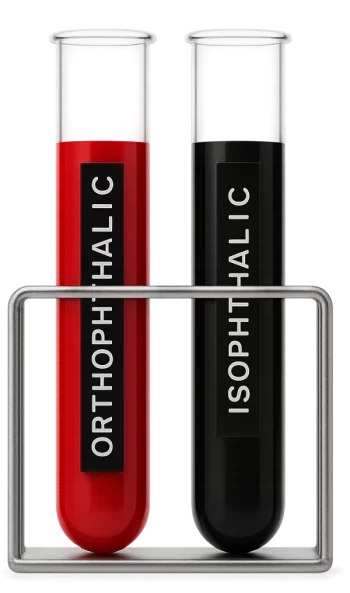
Isophthalic vs Orthophthalic — what’s the difference?
These two terms sound complicated, but it’s really about how the resin molecules are structured.
Both types are strong and long-lasting, but they behave a little differently when exposed to the weather.
- Orthophthalic Gelcoat
- Found on many older doors.
- Excellent strength and flexibility but more prone to UV fading and water absorption over time.
- If not protected, it can lose its oils faster, leading to that flat, chalky look.
- Isophthalic Gelcoat
- More common on newer or premium doors.
- Has a tighter molecular structure that’s about 40% more resistant to UV light and moisture.
- Keeps its colour and shine for longer, especially when regularly maintained.
Whichever type you have, both will slowly degrade if left unprotected — it’s just a matter of time and exposure.
Why protection matters
When a gelcoat is new, it contains natural resins and oils that keep it flexible and shiny. Over time, sunlight, temperature changes, and pollution draw those oils out, making the surface dry and brittle.
This is called oxidation, and once it starts, the gelcoat begins to fade, go patchy, and lose its ability to repel water.
That’s where Protect My Door treatments come in.
Our products clean gently without leaving residue, then replenish and seal the surface, adding back the protection that time and weather take away.
Quick comparison

In simple terms
If your door is older, it probably has an orthophthalic gelcoat — meaning it can benefit most from immediate restoration.
If it’s newer, it likely uses an isophthalic gelcoat — meaning you’re starting from a stronger base, but protection will still double its life.
Either way, your door’s gelcoat is its skin, and just like skin, it needs care to stay healthy.
Protect it early, and it’ll keep your door looking brand new for years to come.
Would you like me to now create the next “Learn More” page (for example, “See how thin your door’s gelcoat really is”) in the same clear, human, story-like tone — as if it’s written by your own brand rather than a technical manual?



© Copyright property of Protect My Door™


(1974–2025)
In Loving Memory of Michelle Bentley-Green
“Our time was brief, the struggle was real, but your smiles, love and laughter live on.”

With heartfelt thanks to Mary Stevens Hospice for their exceptional care, dignity, and compassion. Their support meant everything.
Please consider supporting their work … Click Here